The Impact of Digital and Content Marketing on Tourism in Indonesia

durasi baca : 4 menit
The tourism industry has undergone a profound transformation with the advent of digital marketing. But how exactly is the impact of digital and content marketing on tourism? Is it really worth it for tourism businesses to dive digitally?
This article explores the significance of digital and content marketing in enhancing Indonesia’s tourism sector, discussing what digital marketing entails, its role in boosting tourism, and effective strategies for promoting tourist destinations.
What is Digital Marketing?
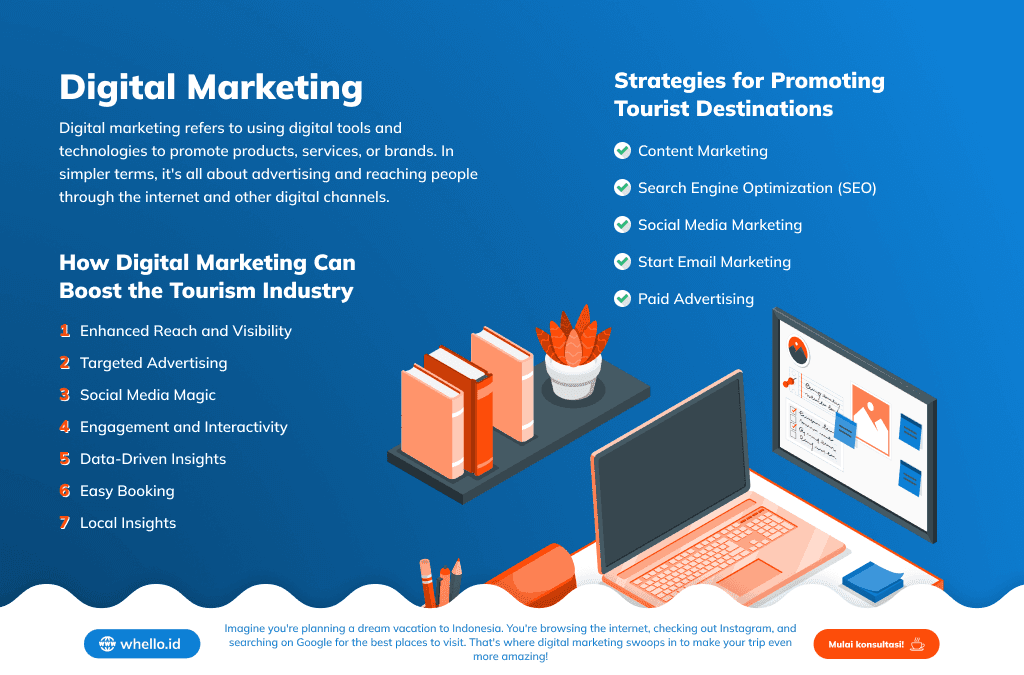
Digital marketing refers to using digital tools and technologies to promote products, services, or brands. In simpler terms, it’s all about advertising and reaching people through the internet and other digital channels.
Here are some key points to understand about digital marketing:
- Channels
It involves using various online platforms like websites, social media, search engines (like Google), email, and mobile apps to connect with potential customers.
- Goals
The main goal is to reach a specific audience, engage with them, and persuade them to take actions such as buying a product, signing up for a service, or visiting a website.
- Strategies
Digital marketing uses strategies such as creating websites, posting on social media, sending targeted emails, running online advertisements, and optimizing content to appear in search engine results.
- Measurement
Unlike traditional marketing (like newspaper ads or billboards), digital marketing allows for precise tracking and measurement of results. Marketers can see how many people saw an ad, clicked on a link, or made a purchase, which helps in adjusting strategies for better effectiveness.
How Digital Marketing Can Boost the Tourism Industry
Imagine you’re planning a dream vacation to Indonesia. You’re browsing the internet, checking out Instagram, and searching on Google for the best places to visit. That’s where digital marketing swoops in to make your trip even more amazing!
Here’s how digital marketing boosts the tourism industry:
1. Enhanced Reach and Visibility
Digital marketing enables tourism destinations in Indonesia to reach a global audience instantly. Through social media, search engines, and travel websites, destinations can showcase their unique attractions and experiences to potential travelers worldwide.
2. Targeted Advertising
Unlike traditional marketing, digital marketing allows for precise targeting of specific demographics, interests, and behaviors.
This targeted approach ensures that promotional efforts are directed towards individuals most likely to be interested in visiting Indonesia, thereby increasing conversion rates and maximizing marketing budgets.
3. Social Media Magic
Ever scrolled through Instagram and seen stunning photos of Bali’s beaches or Yogyakarta’s temples? That’s exactly how digital marketing in social media works!
Tourism boards and businesses use social media to show off Indonesia’s beautiful spots, which inspires audiences to pack their bags and go explore.
4. Engagement and Interactivity
Interactive content such as virtual tours, live streams, and user-generated content (UGC) engages potential tourists on a deeper level.
It allows them to experience Indonesian culture, landscapes, and activities firsthand, fostering a sense of connection and desire to visit.
5. Data-Driven Insights
Digital marketing tools provide valuable insights into consumer behavior, preferences, and trends. By analyzing data such as website traffic and booking patterns, tourism stakeholders can tailor their marketing strategies to meet evolving traveler expectations effectively.
6. Easy Booking
As we know, thanks to digital marketing, booking your Indonesian adventure is just a few clicks away. Websites and travel apps make it super easy to find flights, hotels, and activities, saving you time and hassle.
7. Local Insights
Whether it’s through travel blogs, reviews, or social media posts from other travelers, digital marketing gives you insider tips and real experiences shared by people who’ve been there. It helps you plan your itinerary and discover hidden gems that make your trip unforgettable.
8. Cited in AI Search
Today, travelers are no longer relying only on Google to plan their trips. Many are also asking AI-powered platforms questions such as “What are the best things to do in Bali?”, “Which travel agency should I use for a family trip to Indonesia?”, or “What are the best tour packages for first-time visitors?”
This creates a new opportunity for tourism businesses. By optimizing their online presence for AI search, businesses can increase their chances of being mentioned or recommended when potential travelers ask AI for suggestions.
This approach is often referred to as Generative Engine Optimization (GEO). While traditional SEO focuses on helping websites rank in search engine results, GEO focuses on making a brand, business, and its content easier for AI systems to understand, trust, and reference when generating answers.
How Tourism Businesses Can Get Featured in AI Search
Here are several tips how your business can get featured in AI search:
1. Create Clear and Helpful Travel Content
AI systems need reliable information to understand what a tourism business offers. Instead of creating content solely around keywords, tourism businesses should answer the questions travelers actually ask.
For example, a tour operator could create content around:
- What is the best time to visit Bali?
- What should you do in Ubud for 3 days?
- What are the best Bali activities for families?
- How much does a private Bali tour cost?
- What should first-time visitors know before traveling to Indonesia?
Detailed, useful content gives AI more context about the business and can increase the chances of the brand being considered when users ask related questions.
2. Make Your Business Information Easy for AI to Understand
AI search relies on information from websites and other online sources to understand businesses. Make sure important information such as your services, destinations, pricing, opening hours, locations, contact details, and booking process is clear and consistent across your digital channels.
For tourism businesses, this is especially important because travelers often make decisions based on practical information before booking.
3. Build Trust Through Reviews and Online Mentions
Travelers want recommendations they can trust, and AI systems also benefit from signals that help establish a business's credibility.
Encourage genuine customer reviews and maintain a consistent presence across relevant travel platforms, social media, business listings, and other authoritative websites. Positive experiences, testimonials, and third-party mentions can help strengthen your brand's online presence.
4. Answer Specific Traveler Questions
One effective way to increase visibility in AI search is to create content that directly addresses specific traveler needs.
For example, instead of only publishing an article titled “Bali Tour Package,” a tourism business could publish:
“What Is Included in a Bali Private Tour Package?”
or
“How to Choose the Right Bali Tour Package for Your Family.”
This type of question-and-answer content aligns more closely with how people interact with AI assistants and can make your website a more useful source of information.
5. Combine SEO and GEO for Better Visibility
GEO should not replace SEO. Instead, tourism businesses should combine both strategies.
Traditional SEO helps your website become visible in search engine results, while GEO helps make your content more useful and understandable for AI-generated answers. Strong content, clear website structure, relevant keywords, trustworthy information, and consistent business details can support visibility across both traditional and AI search.
How AI Search Can Increase Tourism Conversions
Appearing in an AI-generated answer can be valuable because travelers asking AI questions are often already looking for recommendations or solutions.
If your tourism business is mentioned as a relevant option, the recommendation can introduce your brand at an important decision-making moment. From there, a well-optimized website, clear tour packages, strong reviews, and a simple booking process can help turn that discovery into an inquiry or booking.
In other words, being visible where travelers ask questions can help tourism businesses attract more qualified prospects and create more opportunities for conversion.
Why AI Optimization Matters for Tourism Businesses
The way people discover travel destinations and services continues to evolve. Social media, search engines, travel platforms, and now AI-powered search all play a role in the travel decision-making process.
For tourism businesses, the goal is no longer simply to rank on Google. It is to build a strong digital presence that can be discovered, understood, and trusted across multiple platforms—including AI-powered search experiences.
By combining content marketing, SEO, social media, paid advertising, and GEO, tourism businesses can increase their digital visibility, reach travelers at different stages of the customer journey, and ultimately create more opportunities to convert potential travelers into customers.
Example of Digital and Content Marketing for Tourism
As an example of digital and content marketing for tourism, let’s take a look at one of Whello’s clients which is Seindo Travel.
As their Digital Marketing Agency Indonesia, Whello is responsible for several key tasks for Seindo Travel. Initially, we conducted the initial planning for the website, gathering input from the client to ensure it meets their needs effectively.
The primary goal of the website is to make it easy for Seindo Travel customers to purchase flight tickets. To achieve this, we collaborated with various other companies to integrate APIs that connect Seindo Travel’s website with global flight and airport information systems. This integration ensures real-time updates and comprehensive access to flight options worldwide.
In addition to the website, Seindo Travel also utilized Whello’s services to develop a mobile application. The app is now live and available for download on both Google Play Store and App Store platforms.
Given Seindo Travel’s substantial user base, providing a mobile app was deemed highly effective in enhancing user convenience and accessibility for booking flights and managing travel plans.
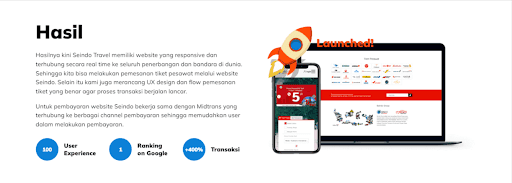
As a result of these efforts, Seindo Travel now boasts a responsive website that seamlessly integrates with global flight and airport data, facilitating hassle-free flight bookings directly through the Seindo Travel website.
Furthermore, we designed UX (User Experience) and streamlined the ticket booking process to ensure smooth transactions.This comprehensive approach has significantly improved the overall user experience and operational efficiency for Seindo Travel’s online platforms.
Interested in Trying Digital and Content Marketing?
To harness these powerful tools for your tourism business, consider leveraging Whello’s comprehensive services. If you need website development, social media management, or SEO services honed over seven years of trust, Whello is equipped to elevate your marketing efforts.
Moreover, take advantage of free website analytic tools and consultations to optimize your digital presence. Don’t hesitate reaching out to Whello today to start enhancing your tourism business!
Frequently Asked Questions
Digital marketing levels the playing field by enabling smaller businesses to reach a global audience without the need for large marketing budgets. It allows them to compete with larger enterprises by showcasing their unique offerings and connecting directly with travelers.
Suka Artikel Ini?
Subscribe Newsletter Whello Gratis
Dapatkan promo eksklusif dan konten menarik langsung di emailmu.

Tentang Yuda Pramudyatama
Digital Marketing Consultant
Hai, perkenalkan namaku Yuda, Digital Marketing Consultant di Whello Indonesia. Yuk bareng-bareng belajar digital marketing lebih dalam!